Posts

Generative AI: Advantages, Disadvantages, and Ethical Considerations

Image
Introduction: Generative AI, a branch of artificial intelligence that creates new content from data patterns, has revolutionized numerous fields, from art and music to medicine and finance. However, as with any powerful technology, it brings both significant benefits and notable challenges. DataScience with Generative AI Course Advantages Innovation in Creativity : Generative AI has unleashed new possibilities in creative industries. Artists and musicians can collaborate with AI to produce novel works, often blending styles and genres in ways that were previously unimaginable. Efficiency in Data Processing: In fields like medicine, Generative AI can analyze vast datasets to generate insights, develop new drugs, or create personalized treatment plans. This accelerates research and improves patient outcomes. Enhanced Automation: In manufacturing and design, Generative AI can optimize products and processes, leading to more efficient and cost-effective production methods. It c...

Azure OpenAI: Revolutionizing AI Integration

Image
  Azure OpenAI: Revolutionizing AI Integration Azure OpenAI Service, a collaboration between Microsoft and OpenAI, represents a significant advancement in artificial intelligence integration within cloud services. This service brings the power of OpenAI's large language models, including GPT-3, directly into the Azure ecosystem, enabling businesses to leverage advanced AI capabilities for a wide range of applications. Generative AI (GenAI) Courses Online Integration and Accessibility Azure OpenAI Service democratizes access to cutting-edge AI technologies by making them easily accessible through the Azure cloud platform. Users can seamlessly integrate AI models into their existing workflows, benefiting from Azure's robust infrastructure. This integration allows businesses to scale their AI solutions efficiently and securely, leveraging Azure’s enterprise-grade security and compliance standards.   DataScience with Generative AI Course Capabilities and Applicatio...

Basic NLP Tasks in Data Science

Image
Natural Language Processing (NLP) is a pivotal subfield of data science that focuses on the interaction between computers and human language. By leveraging NLP, data scientists can transform unstructured text data into valuable insights and actionable intelligence. Here are some of the fundamental NLP tasks commonly used in data science:   Generative AI (GenAI) Courses Online 1. Tokenization Tokenization is the process of breaking down text into smaller units called tokens, which can be words, phrases, or even characters. This is a crucial step for further text analysis. For instance, the sentence "Data science is amazing" would be tokenized into ["Data", "science", "is", "amazing"]. 2. Part-of-Speech Tagging (POS Tagging) POS tagging involves assigning parts of speech to each word in a sentence, such as nouns, verbs, adjectives, etc. This helps in understanding the grammatical structure and meaning of the text. For example, in the sen...

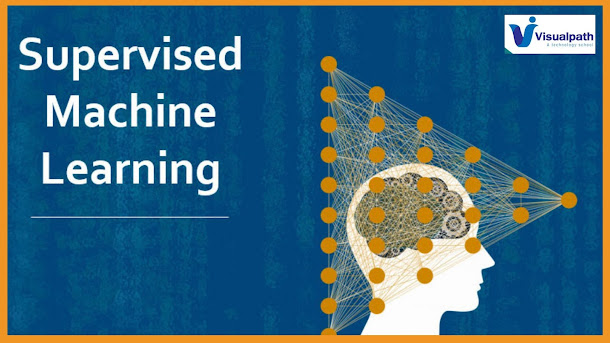
Machine Learning - Supervised Learning

Image
Supervised learning is a fundamental aspect of machine learning, enabling models to make predictions based on labeled datasets. Here’s a concise breakdown of supervised learning:   Generative AI (GenAI) Courses Online 1. Definition Supervised Learning: A machine learning paradigm where models are trained on labeled datasets. Each input data point is paired with an output label, and the model learns to map inputs to outputs. 2. Process Training Phase: The algorithm analyzes the training data, which includes input-output pairs. It adjusts its internal parameters to minimize the error between predicted and actual outputs.  Generative AI (GenAI) Courses Online Techniques: Regression (predicting continuous values) and Classification (predicting discrete labels). Testing Phase: The model is evaluated using a separate testing dataset. Performance metrics such as accuracy, precision, recall, and F1 score are used to assess the model.   DataScience w...

Data Science with Generative AI Online Recorded Demo Video

Image
Data Science with Generative AI Online Recorded Demo Video Mode of Training: Online Contact 📲 +91-9989971070 🔵 WhatsApp: https://www.whatsapp.com/catalog/919989971070 Watch Demo Video @ https://youtu.be/Cb8F5Tv37sc?si=DOX3M4jsMhJImKne Subscribe our channel : https://www.youtube.com/@VisualPath

Generative AI: Principles and Types of Generative Models

Image
Introduction: Generative AI  refers to systems that can create new content, from text to images to music, mimicking human creativity. Unlike traditional AI models that predict outcomes based on input data, generative models produce original data similar to the examples they were trained on. Understanding the principles and types of generative models is essential to grasp the breadth of this transformative technology.      Generative AI (GenAI) Courses Online Principles of Generative AI At its core,  generative AI  operates on the principle of learning patterns from a dataset and then using these patterns to generate new, similar data. This involves two main phases: training and generation. During training, the model learns the distribution of the input data. In the generation phase, the model uses this learned distribution to create new data instances.   DataScience with Generative AI Course Key principles include: Data Representation:  ...

Artificial Intelligence: Types of AI

Image
Artificial Intelligence  (AI) encompasses a wide range of technologies and approaches that enable machines to mimic human intelligence and perform tasks traditionally requiring human cognition. Understanding the various types of  AI  is essential for comprehending the capabilities and applications of this rapidly evolving field. Here, we delve into the fundamental types of AI: 1. Narrow AI (Weak AI):   Narrow AI, also known as weak AI, refers to AI systems that are designed and trained for specific tasks or domains. These systems excel at performing well-defined tasks within a limited context but lack general intelligence or the ability to understand and perform diverse tasks. Examples of narrow AI include virtual assistants, chatbots, recommendation systems, and image recognition algorithms.   Generative AI (GenAI) Courses Online 2. General AI (Strong AI):  General AI, also known as strong AI, refers to AI systems with human-level intelligence and cog...